Fruit bushes – compare species and uses


Fruit bushes – compare species and uses
Fruit bushes are a simple and decorative way to get fresh fruit and berries straight from the garden. They often require less space than fruit trees and can produce abundant harvests after just a few years. Whether you want juicy currants for jam, sweet blueberries for breakfast or sun-ripened raspberries for desserts, there is a fruit bush that suits your climate and garden.
In this article, you’ll get an overview of what to consider when choosing fruit bushes, as well as an introduction to different species, uses and producers.
The article presents a selection of fruit bushes representing different species, growth forms and uses. The aim is to provide an informative overview of the most common types and their characteristics. The product information is based on descriptions from producers and retailers and has been summarised to provide a clear basis for comparison.
Factors to consider when buying a fruit bush
When choosing fruit bushes for your garden, it’s important to consider both soil type, sunlight and the purpose of the cultivation. Here are some of the most important factors to consider.
1. Climate and placement
Most fruit bushes thrive best in sunny locations, but some species, such as blackcurrants and blueberries, can also tolerate light shade. Make sure the soil is well-drained and avoid places where water stands after rain.
2. Soil type and pH value
The soil’s acidity plays a major role. Blueberries require acidic soil (pH 4–5), while currants and gooseberries thrive in more neutral soil. You can adjust the soil with peat or compost depending on the species you choose.
3. Pollination and harvest
Some fruit bushes are self-pollinating, while others require a partner to produce fruit. Therefore, check whether you need to plant several bushes to ensure a good harvest. Also consider how much fruit you want – some varieties produce large quantities, while others are more modest.
4. Care and pruning
Regular pruning promotes both health and fruiting. Remove old branches to make room for new shoots. Some species require more care than others, so choose a bush that suits the amount of time you want to spend in the garden.
5. Use and taste
Think about how you want to use the berries – for fresh consumption, juice, jam or baking. Raspberries and blackberries are popular for fresh use, while currants and blackcurrants are often used for juice and jelly.
Products in focus
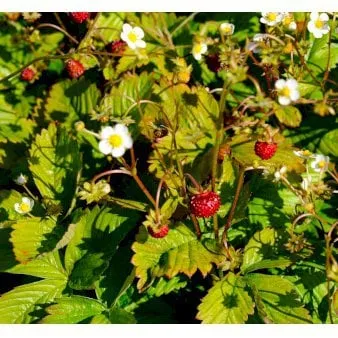
Wild strawberry (Fragaria vesca) is a perennial plant that grows low and forms dense clumps with runners that quickly spread and cover the ground. It thrives best in light to partial shade on moisture-retaining garden soil and requires only limited maintenance once established.
The plant grows about 10–20 cm tall and has green, serrated leaves. In May–June, it blooms with small white flowers that later develop into red, aromatic berries. Under favourable conditions, an additional flowering and fruiting may occur later in the summer.
Wild strawberry is suitable as ground cover in borders, under shrubs, or as an edging plant in the kitchen garden. It is also a host plant for the grizzled skipper butterfly, thereby contributing to biodiversity in the garden.
- Low-growing ground cover: Forms dense clumps and spreads with runners.
- Edible berries: Small, red, and aromatic fruits during the summer months.
- Flowering: White flowers in May–June, with the possibility of additional flowering later in the season.
- Placement: Thrives in sun to partial shade on moisture-retaining soil.
- Native species: Contributes to a natural and insect-friendly garden environment.
Pros and cons
- Easy to grow and undemanding plant
- Covers the ground effectively and suppresses weeds
- Produces edible berries
- Attracts pollinators and butterflies
- Can spread quickly and therefore requires some control in small borders
- The berries are small and ripen over an extended period
Pros and cons
Pros
- Easy to grow and undemanding plant
- Covers the ground effectively and suppresses weeds
- Produces edible berries
- Attracts pollinators and butterflies
Cons
- Can spread quickly and therefore requires some control in small borders
- The berries are small and ripen over an extended period
Pros
- Easy to grow and undemanding plant
- Covers the ground effectively and suppresses weeds
- Produces edible berries
- Attracts pollinators and butterflies
Cons
- Can spread quickly and therefore requires some control in small borders
- The berries are small and ripen over an extended period
Specifications
- Botanical name: Fragaria vesca
- Height: 10–20 cm
- Width: 20–40 cm
- Planting density: 7–9 plants per m²
- Plant spacing: approx. 30 cm
- Flowering period: May–June (possibly again later in the summer)
- Flower colour: White
- Fruit colour: Red
- Leaf colour: Green
- Growth form: Ground-covering, clump-forming with runners
- Placement: Sun / partial shade
- Growing conditions: Moisture-retaining garden soil
- Hardiness: Fully hardy
- Use: Ground cover, edging plant, pots
- Ripening period: June–August
Product descriptions
Wild strawberry (Fragaria vesca) is a perennial plant that grows low and forms dense clumps with runners that quickly spread and cover the ground. It thrives best in light to partial shade on moisture-retaining garden soil and requires only limited maintenance once established.
The plant grows about 10–20 cm tall and has green, serrated leaves. In May–June, it blooms with small white flowers that later develop into red, aromatic berries. Under favourable conditions, an additional flowering and fruiting may occur later in the summer.
Wild strawberry is suitable as ground cover in borders, under shrubs, or as an edging plant in the kitchen garden. It is also a host plant for the grizzled skipper butterfly, thereby contributing to biodiversity in the garden.
- Low-growing ground cover: Forms dense clumps and spreads with runners.
- Edible berries: Small, red, and aromatic fruits during the summer months.
- Flowering: White flowers in May–June, with the possibility of additional flowering later in the season.
- Placement: Thrives in sun to partial shade on moisture-retaining soil.
- Native species: Contributes to a natural and insect-friendly garden environment.
Pros and cons
- Easy to grow and undemanding plant
- Covers the ground effectively and suppresses weeds
- Produces edible berries
- Attracts pollinators and butterflies
- Can spread quickly and therefore requires some control in small borders
- The berries are small and ripen over an extended period
Pros and cons
Pros
- Easy to grow and undemanding plant
- Covers the ground effectively and suppresses weeds
- Produces edible berries
- Attracts pollinators and butterflies
Cons
- Can spread quickly and therefore requires some control in small borders
- The berries are small and ripen over an extended period
Pros
- Easy to grow and undemanding plant
- Covers the ground effectively and suppresses weeds
- Produces edible berries
- Attracts pollinators and butterflies
Cons
- Can spread quickly and therefore requires some control in small borders
- The berries are small and ripen over an extended period
Specifications
- Botanical name: Fragaria vesca
- Height: 10–20 cm
- Width: 20–40 cm
- Planting density: 7–9 plants per m²
- Plant spacing: approx. 30 cm
- Flowering period: May–June (possibly again later in the summer)
- Flower colour: White
- Fruit colour: Red
- Leaf colour: Green
- Growth form: Ground-covering, clump-forming with runners
- Placement: Sun / partial shade
- Growing conditions: Moisture-retaining garden soil
- Hardiness: Fully hardy
- Use: Ground cover, edging plant, pots
- Ripening period: June–August
Different types of fruit bushes
Fruit bushes come in many varieties that differ in taste, growth habit and cultivation requirements. Here are some of the most common types you can consider for your garden.
1. Currants and blackcurrants
Currants and blackcurrants are classic Nordic fruit bushes that thrive in cool climates. They are hardy, produce stable harvests and require minimal care. Red currants have a fresh, tart flavour, while blackcurrants are more aromatic and well suited for juice and marmalade.
2. Gooseberries
Gooseberry bushes produce large, juicy berries that can be green, red or yellow. They are often used for desserts and preserves. The bushes have thorns but also come in newer, almost thornless varieties.
3. Raspberries and blackberries
These bushes grow quickly and produce large quantities of berries in late summer. They can be planted as hedges or trellises and need support to keep the branches upright. Raspberries come in both summer and autumn varieties.
4. Blueberries and aronia (black chokeberry)
Blueberries require acidic soil and thrive best in sun to partial shade. They produce sweet berries rich in antioxidants. Aronia is a robust bush with dark berries used for juice and marmalade and tolerates frost well.
5. Elder and sea buckthorn
These bushes are both decorative and useful. Elderflowers and berries can be used for juice, while sea buckthorn produces tart, vitamin-rich berries that ripen late in the season. Both species are good for attracting insects and birds.
Different brands of fruit bushes
Several nurseries and producers offer high-quality fruit bushes, often focusing on healthy, disease-resistant varieties and good growth.
Jespers Plantskola
Jespers Plantskola is known for a wide range of fruit bushes adapted to Danish conditions. The range includes both classic and newer varieties, and the plants are often delivered in pots, ready for planting.
Plantetorvet
Plantetorvet offers a large selection of fruit bushes online with detailed descriptions of growing conditions and uses. They focus on quality and fast delivery directly to the garden.
Lundhede Plantskola
Lundhede specialises in robust garden plants, including fruit bushes that thrive in Nordic climates. They offer both conventional and organic varieties.
Bilka Garden Centre
Bilka Garden Centre sells a wide range of fruit bushes in season, often at competitive prices. The range is aimed at both beginners and experienced gardeners.
Plantorama
Plantorama combines physical stores and online sales and offers fruit bushes in many sizes and varieties. They emphasise advice and inspiration for garden life.
Frequently asked questions
When is the best time to plant fruit bushes?
The best time is spring or autumn, when the soil is moist and the temperature mild. Autumn planting gives the bush time to form roots before winter.
How much sun do fruit bushes need?
Most fruit bushes thrive best in full sun, but some species, such as blackcurrants and blueberries, do well in partial shade. The more sun, the sweeter the berries.
Should fruit bushes be pruned every year?
Yes, most fruit bushes benefit from annual pruning to remove old branches and stimulate new growth. It improves air circulation and produces larger fruits.
Can fruit bushes be grown in pots?
Yes, especially smaller varieties such as blueberries and currants are suitable for pots. Make sure there is good drainage and use nutrient-rich soil. Pots, however, require more frequent watering.
How long does a fruit bush live?
With proper care, many fruit bushes can live and produce fruit for 10–20 years. Regular pruning and fertilising significantly extend their lifespan.
Læs også: